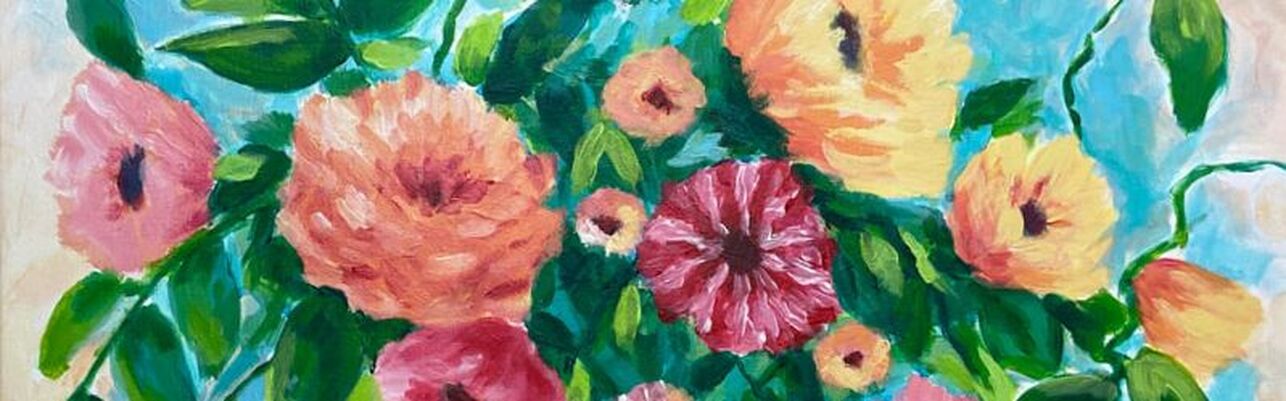
Mary's Baby Boy
Tuesday, December 6, 2011 at 10:22PM This is beautiful. I love the look on Jesus' face as he heals.
Wendy Dewar Hughes | Comments Off |
Christmas,
Jesus birth,
bethlehem,
writing 
Tuesday, December 6, 2011 at 10:22PM This is beautiful. I love the look on Jesus' face as he heals.
Christmas,
Jesus birth,
bethlehem,
writing
Tuesday, November 29, 2011 at 06:53PM This music is so beautiful I had to share it. It is the perfect accompaniment to a grey winter day.
adventure novel,
novel writing,
romantic adventure,
sonate,
winter
Monday, November 7, 2011 at 12:11PM I came across the following article and found it fascinating. From the perspective of an artist and a writer who deals with archaeology as a subject, this is exciting. It comes from Biblical Archaeology Society Staff.
The Hellenistic world that surrounded first-century C.E. Judea abounded in Roman sculpture. Ancient Roman artists carved elegant marble images of gods, warriors and emperors that filled the halls and bathhouses from Alexandria to Damascus. Even some of Judea’s cities, like the extravagant port of Caesarea Maritima built by Herod the Great, included temples and monuments adorned with pagan Roman sculpture.
For Jews, such statues were an abomination, a direct affront to God’s commandment not to make graven images. But far from being the elegant white yet cold and lifeless works of art we see in museums today, these incredibly lifelike images were often painted by ancient Roman artists in bold, vibrant colors.
“It is interesting to think about what kind of charge [these statues] must have had for Jews of the time,” said Peter Schertz, the Jack and Mary Ann Frable Curator of Ancient Art at the Virginia Museum of Fine Arts (VMFA), adding that the “Jewish prohibition against idolatrous images must have made the appearance of classical statues both very frightful and, for some, somewhat seductive.”
Schertz is part of a team of researchers attempting to digitally reconstruct how ancient Roman sculpture, such as this first-century C.E. marble statue of the Roman emperor Gaius Caligula (37–41 C.E.), actually appeared. The Gaius Caligula statue, housed at the VMFA since the 1970s, is one of only two complete statues of the reviled emperor known to exist and, therefore, according to Schertz in an interview with Biblical Archaeology Review, “historically the most important Roman statue in North America.”
Given its rarity, the Roman sculpture was an ideal candidate for digital reconstruction by the University of Virginia’s Virtual World Heritage Laboratory and Direct Dimensions, Inc., especially since significant traces of paint were found on its surface. After a detailed three-dimensional computer scan was made of the entire statue, researchers began studying the preserved color fragments as well as other color traces on painted busts and statues of Roman emperors to reconstruct how the Gaius Caligula statue might have looked 2,000 years ago.
Traces of purple found on Caligula’s torso indicate that his toga had either a purple stripe or that he wore a completely purple toga. The study also found that the edges of the toga are decorated with zigzag designs and may have once been painted gold to represent the imperial garment’s gold-embroidered fringes.
Even more arresting is the reconstruction of Gaius Caligula’s face and head—modeled after painted busts of the emperor—which shows him with dark brown hair, tanned, radiant skin and a soft, youthful gaze. Ancient Roman artists achieved such realism through sophisticated painting techniques that allowed subtle variations in color, tone and shadow to accentuate the carved features of the marble Roman sculpture.
The final, digital reconstruction of Caligula’s likeness will debut this December at the VMFA during a special public symposium exploring past portrayals of the Roman emperor alongside the new 3-D digital model. The model will then appear permanently on the VMFA Web site as well as that of the University of Virginia’s Digital Sculpture Project, making the Caligula statue available to all, whether for study or enjoyment.
“Before, if you really wanted to study a statue, you had to be there in person,” said Schertz. “With this technology, you’ll be able to experience the statue as if you were there.”

This Roman sculpture from the collection of the Virginia Museum of Fine Arts depicts the Roman emperor Gaius Caligula. New research suggests ancient Roman artists painted imperial statues with bold, vibrant colors. Photo by Katherine Wetzel.

This digital model of the Gaius Caligula statue shows how ancient Roman artists likely styled Roman sculpture 2,000 years ago. Reconstruction by Matthew Brennan, Virtual World Heritage Laboratory.
Thursday, November 3, 2011 at 03:41PM The scarlet macaw has suffered at the hands of hunters and collectors over the years but now a new program has been instituted to bring it back to the wilds of Honduras at the ruins of Copan. Take a look.
Monday, October 24, 2011 at 09:52PM I love Anne Rice's candor in this interview about her spiritual life and how it came about. Obviously, the change in subject matter for her novels has been dramatic but it is the consecration of her life to love and please God that is so inspiring.
anne rice,
novel writing,
pleasing God,
spiritual live
Sunday, October 23, 2011 at 12:15AM Since my days as a child, lying on my stomach and gazing at the fold-out illustrations in National Geographic magazines, I have always been fascinated by archaeology. Mysteries and challenges intrigue me, which is why a Mayan archaeological find is the subject of my novel, Picking up the Pieces.
I found this little video about Mayan archaeology. Unfortunately, the archaeologist is not named but I find it significant that he is far from a young man, yet is still digging around in the jungles making discoveries.
Friday, September 30, 2011 at 10:46AM The Dead Sea Scrolls are now available to view online, thanks to Google. This is amazing and a wonderful use of technology because it brings historical documents within reach to anyone who wants to view them.
Take a look:
Israel,
biblical archaeology,
dead sea scrolls,
history,
novel
Thursday, September 29, 2011 at 01:43PM Summer is my favourite season and I want it to last for at least ten months of the year. But where I live that never happens. (That must be a sign that it's time to move, right?)
This year we suffered through the longest, coldest, rainiest spring I can remember and ended up with only about six weeks of summer, maybe seven if you count random days between showers.
So here is my tribute to the summer too quickly gone by.
Sunday, September 18, 2011 at 08:27PM Yesterday was my hometown Fall Fair and Corn Festival. Held every year on the third Saturday on September, it is one of the events of the season that no one wants to miss.
It all starts with a parade. Unfortunately, the day dawned grey and rainy but parade-goers showed up anyway. It was led off by the Colour Guard - old soldiers who have served our country. Bless them.

I loved the entry from the Donkey and Mule Club (who knew there was such a club?). The little burros were so cute and so well-behaved.

This year the parade was a little heavy on heavy equipment. Since we live in a farming community, this comes as no surprise, however, some of these machines look almost like something out of a science-fiction movie.

Since the weather was cold and wet but the forecast called for clearing and sunshine in the afternoon, I went home for a couple of hours and worked on preparing for my new workshop.
After lunch, I walked over to the fair grounds to have a look at the displays.

The display of hatchling chicks is always popular with children. There is something about those fluffy little bodies that makes you want to hold one in your hand.
Lots of competition in the flower classes this year.

I was the judge for the painting and drawing competition for about the fifth year, though it could be more - I've lost count. The grand prize painting is a lovely seascape.

It was nice that the sun came out for the outdoor competitions. Members of the 4-H Sheep clubs showing off their immaculately-groomed animals.

Some local food producers keeping up with the times. The lady on the left is my sister, Debra, from The Farm House Natural Cheeses. Note the logo artwork on her apron front which was created by me! Our friends, Claude and Trudie Bouchard are from Limbert Mountain Farm.

It wouldn't be a country fair without a carousel and this little cutie is ready to ride.

Plenty of fun to be had on the rides and games.

This is dairy country and these beauties are all dolled up, ready for their next competition.

Sarah, a young competitor, allowed me to take her picture with her rabbit, Cocoa. They both look like winners to me.

You might say that sometimes Fall Fair is a high-flying experience. (No, I didn't go up on that one.)

Wednesday, September 14, 2011 at 07:35PM To me, Willie Nelson is living proof that you can succeed by being the most YOU that you can be. The hair, the clothes, the beat-up guitar - none of those things detract from his music and personality. In fact, they are part of his personality. Why do so many people like him? Why has he so many fans? He is who he is and his music is part of who he is.
Take a look.
Wednesday, September 7, 2011 at 05:01PM I always loved this song so thought I would share it with you today. Doesn't it make you want to go to Italy and have a romance with a gorgeous plate of pasta while being serenaded by a handsome Italian? LISTEN.

amore,
cafe,
dean martin,
italian,
love,
pasta,
romantic adventure
Friday, September 2, 2011 at 10:44PM
bride,
family,
groom,
outdoor wedding,
summer wedding